Most films I make have something that happens. A race starts, a boat is launched, a group of strangers gets into a canoe and comes back different. The event gives the film its spine, and the job is to be in the right position when it arrives.
Environmental restoration has no event. A river catchment does not look like anything in particular on a given Tuesday. The results play out over decades, the successes are often things that did not happen, such as a flood that stayed within its banks or a bank that did not collapse, and there is no finish line to point a camera at. I spent much of last year on three films about community-led nature restoration, in Fife, in Perthshire and in the north of Loch Lomond and the Trossachs National Park, and that absence shaped all of them.
The subject is a system, not a scene
The first practical problem is scale. Restoration works at the scale of a catchment, and a catchment is not a place you can stand in and see. On the ground a river is a series of disconnected views: a bridge, a stretch of bank, a field edge, a car park. The thing the organisation is actually working on, the whole system from source to sea, is invisible from every point within it.
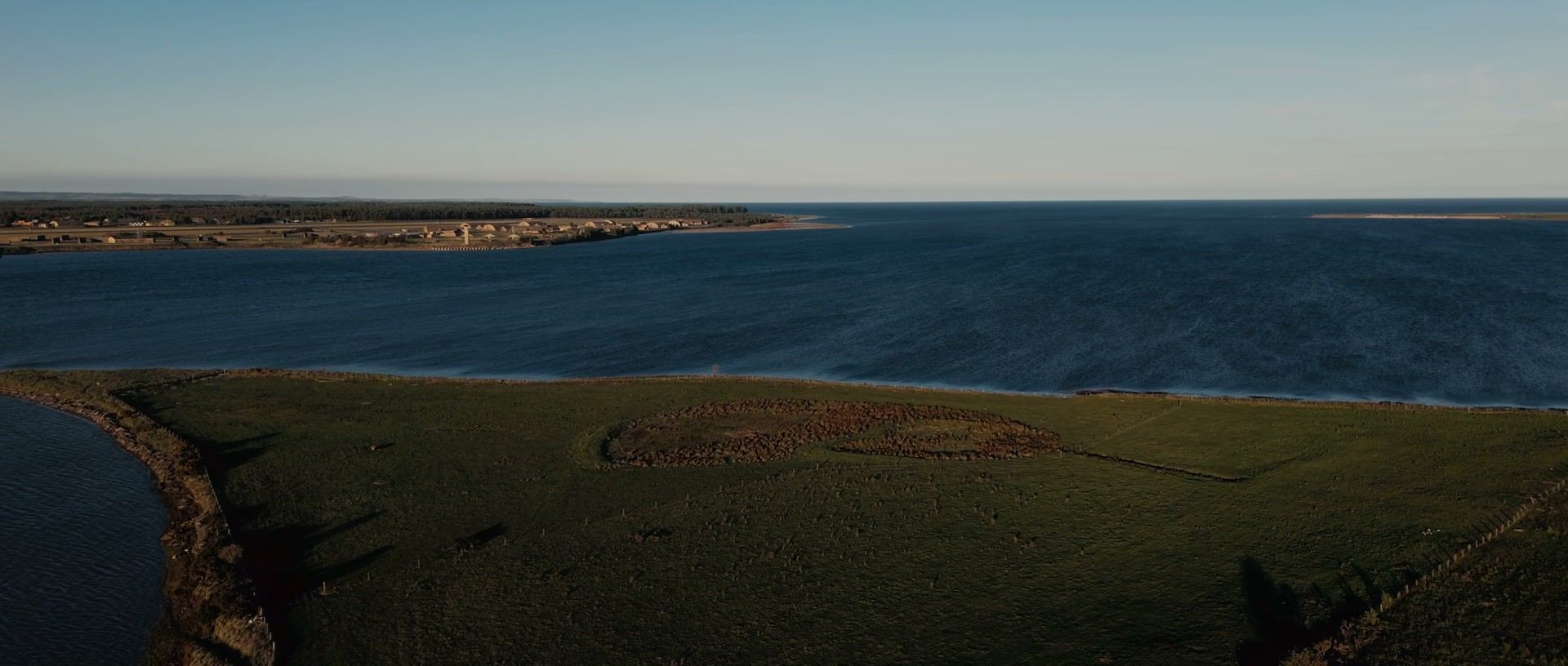
This is the one situation where aerial filming is not decoration. The River Eden runs about 48 kilometres through Fife, from near Burnside to the estuary at Guardbridge, and from the air it reads as a single continuous corridor even where it disappears behind a hedge. That single shot makes an argument that would otherwise take a paragraph of voiceover, which is that this is one river and one problem rather than nine parishes with nine separate views about it. In Strathfillan the aerials do the reverse job, showing that a project claiming 50,000 hectares really is that big.
Drone work gets criticised, fairly, for being used as filler in films that do not need it. Here it is load bearing, and I would have struggled to make the case for these projects without it. The permissions and planning side of that is covered separately in the piece on drone filming permissions in Scotland.
What the film is for changes what you shoot
The three films came through one commissioner, The Glasgow School of Art, working through Bioregioning Tayside. The projects themselves chose what their film was for, and they did not all choose the same thing. Wild Strathfillan wanted a film to send to funders. The other two wanted a visual record of work already done.
I had assumed that was a distinction that would matter in the edit. It is a distinction that matters on the shoot.
A film for funders is an argument. The audience is small, already interested and professionally sceptical, and it has sat down on purpose, so none of the usual advice about hooking someone in three seconds applies. What it needs is the case: what the problem is, what the plan is, and whether the people proposing it can be trusted with the money. That means the people making the case have to be on camera, at length, making it in their own words, and it means being honest about the size of the task rather than flattering it. A film that made a 50,000 hectare project look manageable would be doing the project harm, because the panel would fund it at the wrong level.
A record has a different test entirely. It is watched by the people who were there, and it has to still be worth watching in ten years. That pushes towards the work itself and the people doing it, filmed where it happens, and away from anything that will date: no current statistics on screen, no funding round mentioned by name, no reference to a policy that will have been replaced. It also asks for more completeness than a promotional cut would. The River Eden film runs to ten minutes and forty seconds because the partnership is genuinely several organisations with different stretches of river and different reasons for caring, and cutting four of them would have made a tidier film and a worse record.
If you are commissioning this kind of work, that is the question to settle before anyone books a shoot day. Not what the film should say, which tends to sort itself out, but who is going to watch it and what you need them to do afterwards.
Slow subjects need people
The other consequence of having no event is that the film has to find its structure somewhere else, and in practice that means people. Not as talking heads dropped in between landscape shots, but as the actual spine.
This works because the people involved in community restoration have usually been at it for years, which means they can describe what a place used to be like. That is the only reliable way to show change in a subject that changes too slowly to film. Nobody can shoot twenty years of a river recovering. Somebody who has walked it for twenty years can tell you what has gone and what has come back, and if you have filmed the place properly the viewer can see what they are describing.
It also solves the credibility problem, which matters more here than in most commissions. Restoration projects are asking people to believe in an outcome that will arrive long after the current funding round. The evidence available today is mostly the seriousness of the people doing the work, so the film has to let them be serious at sufficient length to be convincing. This is one of the places where a three minute cut actively fails.
Where this sits
Environmental film in Scotland tends to be treated as either broadcast natural history or short campaign content, and there is a large gap in between where most of the actual work is: community trusts, catchment partnerships, countryside trusts and the bodies that fund them, all of whom need to explain slow, unglamorous, expensive work to people who have not stood in it.
That is close to the documentary and landscape work I already do, and it asks for the same things. Access, patience, an understanding of the ground, and a willingness to make a film as long as the subject needs. The three films are collected in the Bioregioning Tayside case study, and the wider approach is set out under documentary production in Scotland.